
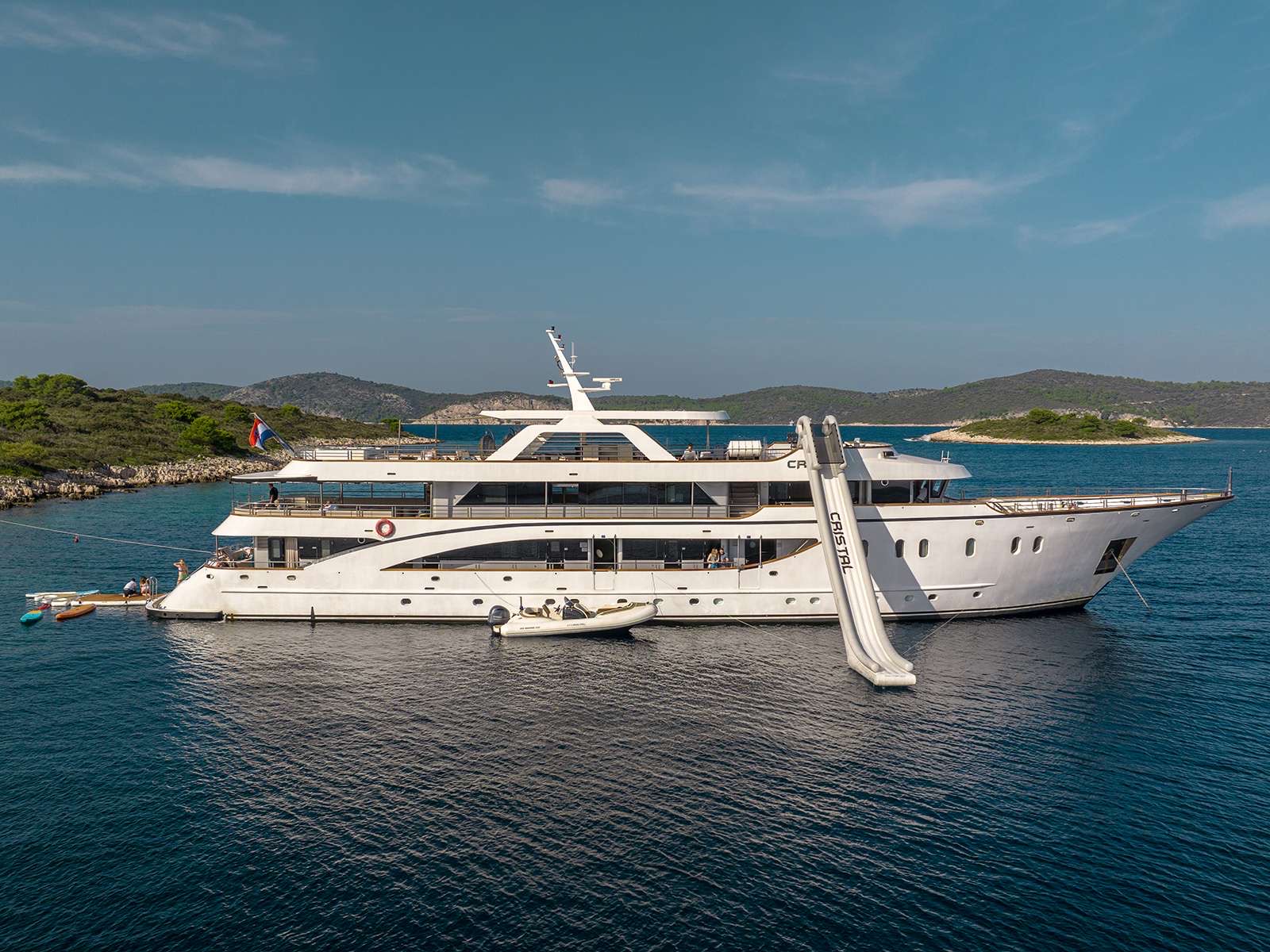
APA, the Advance Provisioning Allowance, is money you pay in advance on a plus-expenses charter to cover the running costs of your week, such as fuel, food, drink and berthing. Broker guidance puts it at about 25% to 40% of the charter fee, set by the yacht. It is an advance, not a fee: the captain accounts for it with receipts, and unused money is returned or a shortfall settled under the contract.
At a glance
| What it is | An advance against your week's running costs, held and spent by the captain |
| Usual size | About 25% to 40% of the charter fee, set by the yacht (IYC, Fraser) |
| When you pay it | With the charter balance, before the charter starts |
| What it is not | A fee, a cap, or the crew tip |
| At the end | Accounted for with receipts: unused money returned, any shortfall settled |
| The one thing to check | Which costs your contract pays from the APA, and which it bills separately |
What APA is for
On most crewed charters outside the all-inclusive market, the weekly charter fee pays for the yacht and her crew. The costs of using her during the week are paid separately, from an advance you send before the charter: the Advance Provisioning Allowance, or APA.
The captain spends the APA on your behalf during the week, keeps the receipts and gives you an account at the end. What it may be spent on is set by your charter contract, not by custom, so read that clause before you sign.
Typically it pays for:
- Fuel for the yacht, the generators, the tenders and the water toys. On a motor yacht this is usually the largest item.
- Food and drink, bought to the preference sheet you send before the charter.
- Berthing and port costs: marina nights, water, electricity and harbour dues.
- Extras you ask for, such as guides, transfers or special orders.
How much it is
APA is quoted as a percentage of the charter fee, and the yacht, not the guest, sets it. IYC describes it as usually estimated at 25% to 40% of the charter fee. Fraser gives the same range for Greece.
| What drives it | Why |
|---|---|
| How the yacht is powered | A motor yacht that moves every day burns far more fuel than a sailing yacht at anchor |
| How far you go | Longer passages between anchorages mean more fuel |
| Where you stay | Busy marinas in peak season cost more than nights at anchor |
| What you eat and drink | A preference sheet of fine wines draws the advance down faster |
Illustration: what APA adds to a charter fee
| Line | Amount |
|---|---|
| Charter fee | €35,000 |
| APA at 30% of the fee | €10,500 |
| Paid before the charter | €45,500 |
The €45,500 is before any tax charged on the charter fee, any delivery charge and the crew gratuity. At the end of the week the €10,500 is reconciled against what was actually spent: if €8,900 was used, €1,600 comes back to you; if €11,700 was used, you settle the €1,200 difference.
What APA does not pay for
- The charter fee itself.
- Tax on the charter fee, where it applies. How tax applies to the fee and to the expenses depends on the contract and the place; ask your broker to confirm it in writing.
- The crew gratuity. It is separate and at your discretion.
- Your travel to and from the yacht.
How the money moves
- You pay the APA with the charter balance, before the charter starts. The contract sets the date.
- The broker or the yacht's manager passes it to the captain.
- During the week the captain tracks spending. Ask how often you will see the running account.
- At the end you receive the account with receipts. Unused money is returned and a shortfall is settled as the contract says. Some invoices, such as fuel or marina bills, may arrive after you leave, so the final reconciliation can follow later.
What to ask your broker
- What percentage is the APA on this yacht, and is it worked out on the charter fee before or after tax?
- Which costs does the contract pay from the APA, and which are billed separately?
- How much have recent charters on this yacht actually spent compared with the APA?
- In which currency is the APA paid and refunded, and who pays any exchange or bank charges?
- How and when will the captain show me the running account during the week?
- How are late invoices handled after the charter ends?
When this is not the right choice
- You want one fixed number. If a top-up at the end of the week would be unwelcome, ask about all-inclusive charters, or plan a route with shorter passages.
- Your plan is long daily runs on a fast motor yacht. Even a high APA may need topping up; ask what similar weeks on that yacht have spent.
Questions people ask
Is APA refundable?
Unused APA is returned to you after the captain's account is reconciled with receipts. How and when it is returned, and how any late invoices are handled, is set by your charter contract, so check that clause.
What happens if the APA runs out?
The captain should warn you before the advance runs low, and you top it up as the contract provides. Any shortfall at the end is settled against the final account.
Is the crew tip part of the APA?
Normally not. The gratuity is separate and at your discretion. If you would like the captain to take it from the APA balance, agree that in advance.
Why is APA higher on a motor yacht?
Fuel. A motor yacht that moves every day uses far more fuel than a sailing yacht, and fuel is usually the largest cost paid from the APA, so the yacht sets a higher percentage.
Is tax charged on the APA?
It depends on the contract and where the charter takes place. Ask your broker to confirm in writing how tax applies to the charter fee and to the expenses paid from the APA.
Sources
- IYC, Everything you need to know about the APA, read 29 Oct 2026
- Fraser, Greece yacht charter cost, read 29 Oct 2026
Spotted something out of date? Send a correction. We fix it and note the date.