
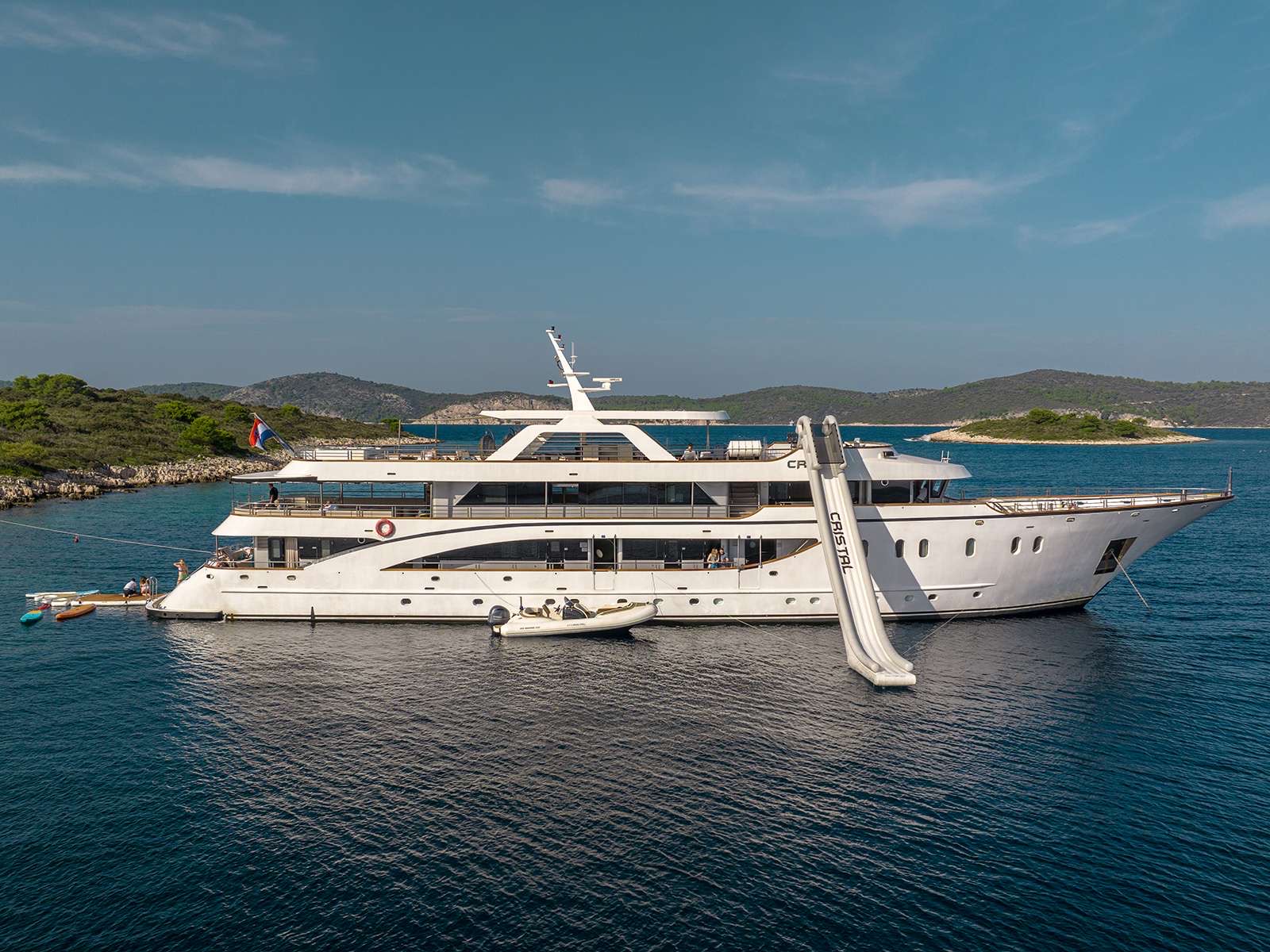
You agree a brief and budget with your broker, who shortlists yachts and makes an offer. You then sign a sale contract, usually the MYBA form in Europe or the IYBA form in the US, and pay a deposit to a stakeholder. A sea trial and survey follow, with acceptance and rejection rights set by the contract, and at closing the balance, the bill of sale and the yacht change hands together. Have a yacht lawyer review the contract before you sign.
At a glance
| The usual contracts | The MYBA Memorandum of Agreement in Europe, the IYBA Purchase and Sale Agreement in the US (Stephenson Harwood, 2026) |
| The deposit | Paid to a stakeholder; the amount is agreed in each deal (Hill Dickinson, 2023) |
| Sea trial and survey | Before final acceptance; your rights to reject, the deadlines and any deductions are set by the signed contract |
| Who pays the broker | Normally the seller, out of the sale price |
| At closing | The balance, the bill of sale and the yacht change hands together |
| The one thing to check | Have a yacht lawyer review the contract before you sign |
The steps
| Step | What happens | Who usually pays |
|---|---|---|
| 1. Brief | Budget, use, cruising area, size | – |
| 2. Search | Your broker shortlists yachts, including ones not publicly listed | The seller, through the commission |
| 3. Offer | An offer or letter of intent, sometimes with a period of exclusivity | – |
| 4. Contract | The sale contract is signed and the deposit paid to a stakeholder | Buyer (deposit) |
| 5. Sea trial | The yacht is run at sea | Set in the contract |
| 6. Survey | Haul-out and condition survey | Usually the buyer |
| 7. Accept, reject or agree repairs | Written notice under the contract | – |
| 8. Closing | Balance paid, bill of sale and delivery | Buyer (balance) |
| 9. After closing | Registration, insurance, crew, management | Buyer |
1. Set the brief and the real budget
Agree with your broker how you will use the yacht: how many guests, which seas, private use only or with charter, and how long you plan to keep her. Budget for the year as well as the price. Fraser puts yearly running costs at 10–15% of the yacht's value; Ocean Independence says 10–20%. Our ownership cost calculator breaks this down by size.
2. Search with a buyer's broker
A buyer's broker works for you, searches the whole market and checks each yacht's history. You do not normally pay them directly: the seller pays the sale commission and the brokers share it. Allied Yachting, a broker, gives the total as generally 10% of the gross sale price (2016), and a 2025 SuperyachtNews analysis treats about 10% as the usual starting point, with lower rates often negotiated on very large yachts and new builds.
3. Make an offer
Your broker presents an offer, sometimes as a short letter of intent. It usually names the price, where the yacht will be delivered, and that the deal depends on a sea trial and survey. Expect to show proof of funds. The seller should be ready to confirm title, any mortgages and the yacht's VAT status (YachtBuyer, 2024).
4. Sign the contract and pay the deposit
Signing can create binding obligations, including paying the deposit. Your lawyer should confirm when the agreement takes effect and what happens if a payment is late or missing. The deposit is held by a stakeholder, usually a broker or a lawyer, in a client account. A 10% deposit was long the market norm; the 2021 electronic MYBA form no longer fixes the percentage, so it is agreed deal by deal (Hill Dickinson, 2023). Expect to provide identity and source-of-funds documents early.
5. The sea trial
The trial shows the yacht running: engines under load, steering, stabilisers, noise and vibration. Whether you may reject the yacht after the trial, by when, and what costs may be deducted from your deposit if you do, are set by the signed contract. Ask your lawyer to walk you through those clauses before the trial.
6. The condition survey
The yacht is lifted out and your own surveyor inspects the hull, machinery and systems. See our guide to surveys and sea trials.
After the survey, rejection is usually limited to defects as the contract defines them, and notice must be served within the contract's deadline with the documents it requires, such as a surveyor's statement. Check exactly when the deadline starts and what it requires in the version you sign. Missing it can have serious consequences, including losing the deposit.
7. Accept, reject or agree repairs
Most surveys find something. The usual outcomes are acceptance as she is, acceptance once the seller fixes named items, or a reduced price. A good broker keeps the deal moving without letting the deadlines slip.
8. Closing
The balance is paid to the stakeholder, and the documents and the yacht change hands together. The documents usually include a bill of sale and a protocol of delivery and acceptance recording when and where the handover took place (YachtBuyer, 2024). Any mortgage on the yacht must be released.
Whether the yacht's registration changes depends on your plans: she may stay on the same flag, or be deleted from the seller's register and registered under a new one, with fees for each step. The place of delivery and how you then use the yacht can affect tax, so take tax advice before you agree the place of delivery.
9. After closing
Insurance must be in place from the moment of delivery. You will also need to settle the registration, crew contracts and, for most yachts over 24 m, a management company. Our flag guide covers the first of these.
What to ask your broker
- Which contract will we use, MYBA or IYBA, and which version?
- Who is the stakeholder, and how is the deposit protected?
- What are the deadlines in this deal, and when does each one start?
- Who pays for the sea trial, the haul-out and fuel if I reject?
- Is the yacht VAT-paid, and how is that proved?
- Are there mortgages, crew claims or charter bookings attached to her?
When this is not the right choice
- You want a yacht built to your own layout. Buying a used yacht is the wrong starting point; see new build or pre-owned.
- You will use a yacht only a few weeks a year. Compare the cost of chartering first.
This guide explains the usual process; it is not legal advice. Use a yacht lawyer as well as a broker for the contract. If you are starting a search, one of our partner yacht sales brokers can help.
Questions people ask
Who pays the yacht broker's commission when I buy?
Normally the seller, out of the sale price, and it is shared between the brokers. Allied Yachting gives the total as generally 10% of the gross sale price, and lower rates are often negotiated on very large yachts.
How much deposit do I pay on a yacht?
It is agreed in each deal and paid to a stakeholder such as a broker or a lawyer. A 10% deposit was long the norm; the 2021 MYBA electronic form no longer fixes the percentage.
Can I get my deposit back if I change my mind?
Only as your signed contract allows. Rejection rights after the sea trial and the survey, the deadlines, the documents required and any deductions are all set by the contract, so have a lawyer explain them before you sign.
What is the difference between the MYBA and IYBA contracts?
The MYBA Memorandum of Agreement is the usual form for European deals, and the IYBA Purchase and Sale Agreement for US deals. They differ in details such as rejection rights and deadlines, so read the one you sign with a lawyer.
Sources
- Stephenson Harwood, Mastering the Memorandum of Agreement in yacht acquisitions (2026), read 29 Oct 2026
- Hill Dickinson, MYBA E-MOA 2021 (2 May 2023), read 29 Oct 2026
- YachtBuyer, Sales agreements and process: superyacht law (updated 6 September 2024), read 29 Oct 2026
- Allied Yachting, Mediterranean yacht broker advice for sellers and buyers (12 January 2016), read 29 Oct 2026
- SuperyachtNews, Brokers' crossfire (29 September 2025), read 29 Oct 2026
- Fraser, Hidden costs in yacht ownership (22 April 2026), read 29 Oct 2026
- Ocean Independence, How much does a superyacht really cost? (2026 guide), read 29 Oct 2026
Spotted something out of date? Send a correction. We fix it and note the date.